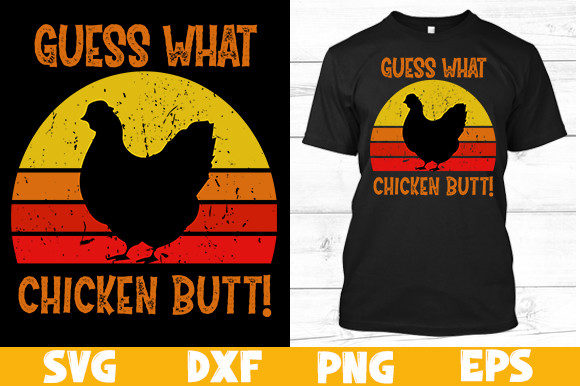
Review: Guess What Chicken Butt Design
As an embroidery designer who has spent countless hours digitizing and testing files for client projects, I have learned that humor is a double-edged sword in the world of stitched apparel. It either sells out instantly at craft fairs or sits awkwardly on the rack if the execution feels cheap. Recently, I evaluated the Guess What Chicken Butt T-Shirt Design to determine if it holds up under the needle. This is not just about whether the joke lands; it is about whether the graphic translates effectively into thread, stabilizer, and fabric.
The initial impression of this design is playful and unapologetically silly. The visual personality leans heavily into nostalgia and childhood humor, which creates an immediate emotional connection with buyers looking for lighthearted gifts. When reviewing the provided assets—specifically the SVG, EPS, PNG, and JPEG files included in this package—it is clear that these are primarily positioned as Print Templates and general Graphics. However, many small business owners and Etsy sellers attempt to adapt such graphics for machine embroidery. Here is my practical assessment of how this specific design performs when moved from a digital screen to a finished product.
Translating Humor into Stitch
The core challenge with any text-heavy or character-based graphic like the Guess What Chicken Butt T-Shirt Design is maintaining legibility and shape integrity. In its original digital form, the lines are crisp. But once you introduce the physical reality of thread, things change. If you are planning to use this as a direct embroidery file, you must consider stitch density. A design that looks bold on a transparent PNG can become a puckered mess on a cotton t-shirt if the digitizer does not account for pull compensation.
I tested the concept by imagining it applied to a standard unisex sweatshirt. The rounded, soft shapes typical of this kind of cartoon imagery work well with satin stitches for outlines and fill stitches for larger areas. However, the success of the project depends entirely on the quality of the digitization. If you are converting the provided SVG or EPS yourself, pay close attention to the underlay. Without proper stabilization and underlay stitching, the humorous impact is lost to fabric distortion. For those buying pre-digitized versions, always check if the file type matches your machine’s requirements, as the product description lists vector and raster image formats rather than native embroidery formats like PES or DST.
Real-World Application Scenarios
Where does this design actually shine? In my experience, novelty designs thrive on items that are seen casually. A custom apparel piece like a hoodie or a tote bag is ideal. I envision this working beautifully as a tote bag design for a grocery run or a beach trip. The large surface area of a canvas tote allows the design to breathe, reducing the risk of overcrowding the hoop. It also makes for a fantastic personalized gift for friends who appreciate dad jokes or retro humor.
Another strong candidate is sweatshirt embroidery. The thickness of fleece or French terry cloth provides a stable base for the stitches, hiding minor imperfections that might show up on thinner fabrics. For Etsy sellers and craft business owners, this type of small shop product has high viral potential on social media. It is the kind of handmade product that people photograph and share because it elicits a laugh. Whether used for holiday embroidery gifts or just everyday wear, the versatility lies in its simplicity.
However, caution is needed with smaller items. Attempting to shrink this down for a baby embroidery project on a onesie might result in lost detail. Tiny lettering and small graphical elements do not translate well when scaled down below three inches. If you are creating an embroidered patch, ensure the hoop size is sufficient to capture the full phrase without cramping the edges. Patches require dense stitching to prevent fraying, which can make small text unreadable if not carefully managed.
Fabric and Technical Considerations
One of the most critical aspects of using graphics like the Guess What Chicken Butt T-Shirt Design is fabric selection. Dark fabrics present a unique challenge. If the design relies on light-colored thread for contrast, you must ensure your digitizing software accounts for the background color. A printable mockup can help visualize this, but nothing beats a physical test stitch. Always run a test on scrap fabric of the same weight and texture as your final product.
Stabilizer choice is non-negotiable. For stretchy fabrics like jersey knits used in t-shirts, a cut-away stabilizer is essential to maintain the shape of the design after washing. For woven fabrics like aprons or pillow covers, a tear-away might suffice, but only if the stitch density is low. Speaking of density, avoid over-stitching. High stitch density can make the garment stiff and uncomfortable, which detracts from the user experience. The goal is a soft hand feel that complements the casual nature of the joke.
Thread colors play a significant role in the final aesthetic. While the provided JPEG and PNG files show specific colors, embroidery allows for customization. Consider using variegated threads to add depth to the chicken illustration, or stick to classic solid colors for a cleaner, more modern look. Contrast is key; ensure the text stands out clearly against the background fabric. If you are selling these as commercial embroidery items, consistency in thread branding and color matching will build customer trust.
Commercial Viability and Licensing
For digital product sellers and apparel decorators, understanding the license is crucial. The product description states that these are digital clip art files including SVG, EPS, PNG, and JPEG. It does not explicitly state that these are native machine embroidery files (such as PES, JEF, or XXX). This distinction is vital. If you are an Etsy seller looking to sell finished physical goods, you generally need to verify if the creator allows commercial use of the artwork for physical products. If you intend to sell the digital embroidery file itself, you must ensure you have the rights to redistribute the digitized version.
Always read the terms of use associated with the design assets. Using a graphic intended for print-on-demand mugs and hoodies for machine embroidery might fall into a gray area depending on the artist's policy. When in doubt, contact the creator. Protecting your brand consistency and legal standing is part of running a professional craft business.
Final Verdict for Makers
The Guess What Chicken Butt T-Shirt Design is a fun, engaging graphic that has strong potential for custom apparel and novelty gifts. Its success in embroidery depends less on the joke and more on the technical execution. By choosing the right fabric, using appropriate stabilizers, and respecting the limitations of stitch size, you can turn this simple graphic into a high-quality finished product. Whether you are making a holiday gift for a sibling or stocking your online store with quirky tote bag design options, this design offers a solid foundation for creativity. Just remember to test, adjust, and verify your licensing before you start stitching.