Review: Master Builder Funny Building Blocks Design
As a designer who has spent countless hours digitizing and stitching out embroidery patterns, I have learned that not every graphic translates well to thread. When I first encountered the Master Builder Funny Building Blocks design, my initial reaction was one of cautious optimism. The concept is playful and nostalgic, tapping into a universal childhood memory that resonates with parents and kids alike. However, seeing a graphic on a screen is vastly different from watching it come to life under the needle of an embroidery machine. This review breaks down how this specific asset performs in real-world applications, focusing on its viability for craft businesses, Etsy sellers, and handmade product creators.
First Impressions and Visual Personality
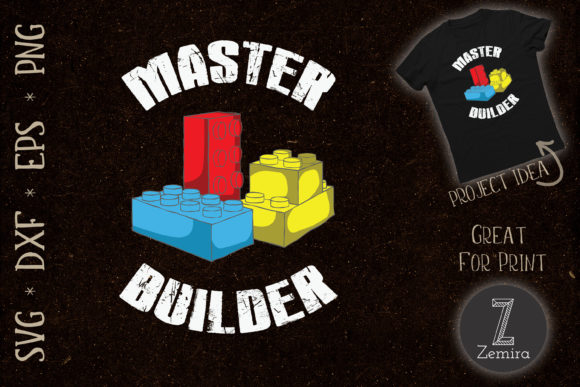
The mood of the Master Builder Funny Building Blocks design is inherently cheerful and whimsical. It captures the chaotic joy of playtime, which makes it an excellent candidate for products aimed at families or individuals with a sense of humor about their creative processes. Visually, the layout relies on geometric shapes that mimic classic toy bricks. For an embroidery project, this presents both an opportunity and a challenge. Geometric shapes require precise stitch alignment to avoid looking jagged or distorted. The visual personality here is bold and straightforward, which generally works in favor of the embroiderer because it does not rely on subtle gradients or ultra-fine details that might get lost in the fabric texture.
When evaluating this as a potential T-Shirt Designs or general Graphics asset, I look for clarity. Does the image read well from a distance? In this case, the blocky nature of the design ensures high recognizability. This is crucial for custom apparel where the wearer wants the message or image to be understood instantly. The design feels like it belongs on items that celebrate creativity, construction, or playful messiness, making it a strong contender for nursery decor or playful adult apparel.
Real-World Application Scenarios
To truly test the value of any digital embroidery file, I imagine it in specific production scenarios. Let’s consider a custom embroidered tote bag. Tote bags are often made from canvas or heavy cotton, which provides a stable base for stitching. The Master Builder Funny Building Blocks design would likely pop nicely against a natural or white canvas background. The sturdy nature of the blocks complements the utilitarian feel of a tote, creating a handmade product that feels durable and fun.
Another strong application is sweatshirt embroidery. Hoodies and crewnecks have become staples in the craft business world. Stitching this design onto the chest or back of a sweatshirt creates a cozy, personalized vibe. Because the design is thematic rather than overly detailed, it scales well. You could place a smaller version on the pocket area for a subtle accent or enlarge it for a statement piece on the back. For Etsy sellers, this versatility is key. It allows you to offer multiple product variations without needing to purchase entirely new design assets.
I also see potential in baby embroidery projects. Onesies and bibs are popular personalized gift items. The building block theme is age-appropriate and gender-neutral, which broadens the market appeal. However, when working with baby items, one must be mindful of comfort. The back of the embroidery should be clean, and the stitch density should not be so high that it creates a stiff patch on soft baby skin.
Technical Considerations for Embroiderers
While the design is charming, technical execution is where many projects fail. The provided files include one SVG for Cricut Explore and Silhouette Designer Edition users, and one DXF for Silhouette users. It is important to note that these are vector cutting files, not native machine embroidery formats like PES or DST. This means you will need to use embroidery software to convert these vectors into a machine embroidery design. This conversion step is critical. You cannot simply import an SVG into your machine and expect perfect results.
During the digitizing process, pay close attention to stitch density. Building blocks are solid shapes. If you fill them completely with a fill stitch, the resulting area may become too dense, leading to puckering or fabric distortion. I recommend using a lighter fill pattern or incorporating satin stitch borders to define the edges while keeping the interior breathable. For smaller details, a running stitch might be more appropriate to maintain flexibility.
Fabric choice matters significantly. On textured fabrics, fine details can disappear. Since this design uses bold shapes, it handles texture better than intricate floral patterns. However, on stretchy fabrics like jersey knits used for t-shirts, proper stabilization is non-negotiable. Use a cut-away stabilizer to prevent the design from warping after washing. For embroidered patch creation, which is a growing trend among small shop product lines, this design would work well on twill or felt backing, providing a crisp, professional finish.
Limitations and Careful Usage
There are areas where caution is advised. If you plan to use this on dark fabric, ensure your thread colors have sufficient contrast. Light-colored threads on dark backgrounds can sometimes appear washed out if the stitch coverage is not dense enough. Additionally, be wary of using this design on curved surfaces like caps without proper testing. The geometric straight lines of the blocks may distort if the hoop tension is not perfectly balanced on a curved cap frame.
Also, consider the washing instructions. Items like kitchen towel designs or aprons undergo frequent laundering. Ensure that the thread colors chosen are colorfast and that the stitch count is secure. A poorly digitized fill stitch can unravel or look fuzzy after several washes, diminishing the perceived value of your finished product.
Enhancing Brand Value and Customer Trust
Using a well-executed version of Master Builder Funny Building Blocks can enhance your brand consistency. It signals that you understand playful, modern aesthetics. For commercial embroidery clients, such as local toy stores or daycare centers, this design offers a professional yet approachable look. It builds customer trust because it looks intentional and high-quality, rather than like a generic clipart paste-job.
When creating printable mockup images for your online store, show the design on various items. Display it on a tote bag design layout, a holiday embroidery themed gift set, or a simple white tee. This helps buyers visualize the end result. Remember, the goal is to sell the emotion and utility of the item, not just the thread count.
Final Designer Notes
Before committing to a large production run, always test the design on scrap fabric identical to your final material. Check the thread color contrast in natural light. Review the stitch density settings in your software to ensure they match the fabric weight. Confirm the hoop size required; while the design is scalable, extremely small versions may lose definition. Finally, verify the licensing terms. Since the product description mentions SVG and DXF files for cutting machines, ensure you have the right to use the converted embroidery design for commercial sales. Many vector artists allow commercial use of the physical items made, but it is always best to double-check.
In conclusion, Master Builder Funny Building Blocks is a versatile and engaging graphic that, when properly digitized and stitched, can add significant value to your embroidery portfolio. It bridges the gap between playful nostalgia and modern design, making it a smart addition for any creative entrepreneur looking to expand their design assets with something truly usable.