Reviewing Smile to the Camera - Funny Drone for Embroidery
As a designer who has spent years digitizing and testing machine embroidery design files, I have learned that the gap between a digital preview and a stitched reality is often wider than clients expect. When I first opened the file for Smile to the Camera - Funny Drone, my immediate reaction was not just about the humor of the subject matter, but about its structural integrity on fabric. This piece falls under the category of Print Templates and Graphics, which suggests versatility, but for us in the stitching world, versatility must be balanced with technical precision.
First Impressions and Visual Personality
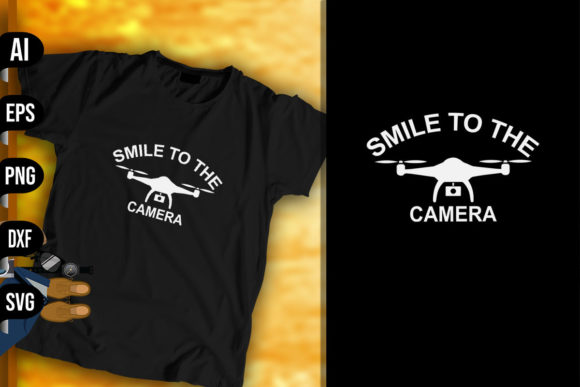
The mood of this design is playful and modern. Drones are ubiquitous now, and giving one a personality through a "smile" creates an instant connection with the viewer. From a layout perspective, the design relies on clean lines and recognizable shapes. For an embroidery project, this is generally good news. Complex gradients do not translate well into thread, but bold, graphic elements do. The visual personality here is lighthearted, making it an excellent candidate for personalized gifts or boutique branding that wants to appear approachable and fun rather than stiff or corporate.
When evaluating any embroidery file, I look at the balance of negative space. In this case, the design seems to have enough breathing room to prevent the fabric from puckering, provided the correct stabilizer is used. It does not appear overly dense, which is crucial for maintaining the softness of the final product, especially if it is intended for wearables.
Real-World Application: The Tote Bag Test
To truly understand how Smile to the Camera - Funny Drone performs, I mentally placed it on a canvas tote bag. This is a common item for craft business owners and Etsy sellers. On a sturdy cotton canvas, the design would likely pop nicely. The contrast between the thread colors and the natural fabric texture would highlight the details without getting lost. I imagined stitching this as a center-chest element on a sweatshirt or as a pocket accent on a denim jacket. In these scenarios, the design acts as a conversation starter.
For small shop products, such as embroidered patches, this graphic style works exceptionally well. A patch allows for higher stitch density because it is backed by a stiff interfacing, meaning the fine details of the drone’s propellers or facial expression would remain crisp. If you are creating a handmade product line, consider using this as part of a series. It fits well within the tech-meets-craft niche, appealing to hobbyists and makers who appreciate gadget culture.
Navigating Fabric and Hoop Constraints
While the design is versatile, there are areas where caution is necessary. If you plan to use this on stretchy fabric, such as a performance tee or a baby onesie, you must pay close attention to your stabilizer choice. A cut-away stabilizer is often safer for stretch fabrics to prevent distortion after washing. Additionally, if you are working with a small hoop size, ensure that the smallest details of the drone do not become too compressed. Tiny lettering or intricate corners can merge together if the stitch density is too high for the scale.
Dark fabrics present another challenge. If you are stitching on black or navy, you will need to carefully select thread colors that offer sufficient contrast. A test run on scrap fabric is non-negotiable here. I always recommend testing the design in black and white mockups first to see if the shape holds up without color reliance. If the design loses its definition in grayscale, it may struggle on low-contrast garments.
Commercial Viability and Customer Trust
For commercial embroidery projects, consistency is key. Buyers engage with products that look professional and durable. Smile to the Camera - Funny Drone has the potential to enhance brand consistency if your shop focuses on whimsical or tech-inspired items. However, customer trust is built on quality execution. If the satin stitch edges are jagged or if there are excessive jump stitches visible on the back, the perceived value drops.
As an Etsy seller or digital product seller, you must also consider the licensing. Since this is listed under Graphics and Print Templates, verify whether the license permits physical resale of stitched items. Many designers allow personal use but require an extended license for commercial sales. Confirming this before listing your finished product on your small shop site is essential to avoid legal issues.
Practical Designer Notes for Execution
Before loading this design into your machine, take a moment to review the stitch path. Look for potential thread breaks in long runs of satin stitch. If the design includes fill stitch areas, check that the angle changes are smooth to avoid visible lines in the thread coverage. Here is a checklist for best results:
- Test on Scrap: Always stitch out on the same fabric type and weight you intend to use for the final product.
- Check Thread Contrast: Ensure your thread colors stand out against the background, especially for detailed areas.
- Review Stitch Density: If the design feels too heavy, consider reducing the density slightly in your software if you have editing capabilities.
- Confirm Hoop Size: Make sure the design fits comfortably within your hoop with adequate margin for clamping.
- Inspect Small Details: Zoom in on the digital file to ensure tiny elements like the drone's camera lens are not too small to stitch cleanly.
- Use Proper Stabilizer: Match the stabilizer to the fabric texture and stretch level.
Final Verdict on Design Utility
In the realm of design assets, Smile to the Camera - Funny Drone offers a solid foundation for creative entrepreneurs. It is not just a cute image; it is a functional graphic that translates well to thread when handled with care. Whether you are making holiday embroidery gifts, custom apparel for a tech meetup, or decorative accents for nursery decor, this design brings a modern flair.
Remember, the success of any embroidery project lies in the preparation. By understanding the limitations of your fabric and the capabilities of your machine, you can turn this digital file into a high-quality finished product. For those looking to expand their printable mockup portfolio or add unique items to their craft fair inventory, this design is worth considering. Just keep your expectations realistic regarding detail retention on textured fabrics, and always prioritize clean stitching over speed. The result will be a professional, engaging piece that customers are happy to wear, use, or gift.